
Thinking 10X: Growth Isn’t the Same as Scale
Most entrepreneurs want growth. More customers. More employees. More revenue.
But according to organizational psychologist and bestselling author Benjamin Hardy, growth and scale are not the same thing—and understanding the difference may be one of the most important shifts a founder can make.
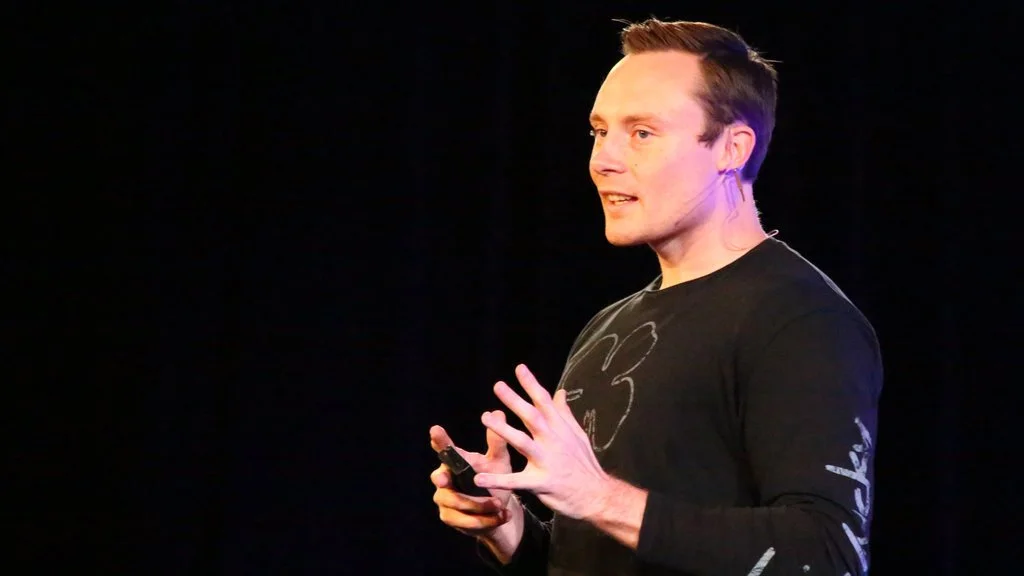
Dr. Benjamin Hardy
During his "Science of Scaling" keynote presentation at Entrepreneurs' Rally XIV, Hardy challenged attendees to rethink many of the assumptions that drive business decisions.
His central message was simple: scaling is a different game than growth.
Many business owners hit a plateau and assume they have a strategy problem. They search for better systems, more marketing channels, additional hires, or new operational processes. But Hardy argues that the bottleneck is often something else entirely.
"The entrepreneur is always the bottleneck. Until you scale yourself, you cannot scale your company."
The Problem with Incremental Thinking
Most businesses operate using what Hardy describes as a growth mindset focused on incremental improvements. If revenue was $5 million last year, the goal becomes $6 million next year. If a process works reasonably well, the focus becomes making it slightly better.
The challenge is that incremental goals often produce incremental thinking. When leaders use their current reality as the basis for future goals, they unintentionally limit what is possible. Hardy argues that truly transformative growth requires a different approach, one that starts with a much larger future vision and works backward from there.
Why 10X Changes Everything
One of Hardy's most discussed ideas comes from his bestselling book 10X Is Easier Than 2X.At first glance, the concept sounds counterintuitive. How could achieving ten times the results be easier than doubling them?
The answer lies in focus. A 10X goal immediately eliminates most of the options competing for your attention. According to Hardy, the majority of common business activities simply cannot produce exponential outcomes. "Most options can't get you to certain types of goals."
When entrepreneurs commit to a dramatically larger vision, they are forced to identify the few activities, relationships, and opportunities that can truly move the needle. In other words, scale requires subtraction before it requires addition.
Strategy Is Mostly About What You Don't Do
One of the most powerful ideas from the workshop came from Hardy's discussion of strategy. Most people think strategy is about doing more. Hardy argues the opposite. True strategy is primarily about deciding what not to do. Businesses become trapped in competition when they chase every opportunity, every trend, and every new initiative.
Scaling requires leaders to become increasingly selective. As Hardy explained, most activities pull companies back toward the average. The goal is to identify the few opportunities capable of creating disproportionate results and focus relentlessly on those.
The Entrepreneur's Next Challenge
For many Rally attendees, the biggest takeaway wasn't a tactical framework. It was a question. If your business were ten times larger three years from now, what would deserve your attention today?
The answer is unlikely to be more meetings, more projects, or more complexity. It may require fewer priorities, greater clarity, and a willingness to let go of opportunities that no longer align with your future vision.
That's the difference between growth and scale. And for entrepreneurs ready to think bigger, it may be the beginning of an entirely new game.